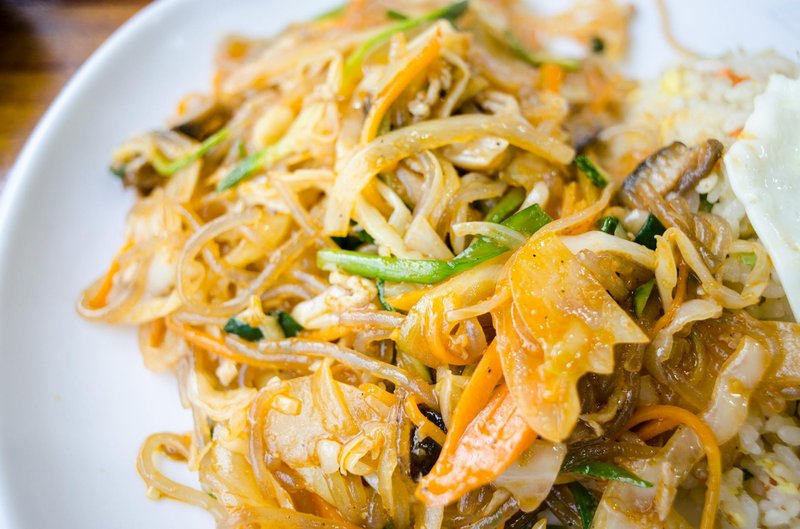
Japchae (Quick Korean Noodle Stir-Fry)
Prep: 15 mins | Cook: 15 mins | Total: 30 mins | Serves: ['4', '4 -6 servings'] | Cuisine: Korean
When you think of indulging in a delightful bowl of Japchae, the rich, savory-sweet flavors and glossy noodles might bring to mind your favorite Korean restaurant. But why settle for takeout when making this quick Korean noodle stir-fry at home is not only easier but also allows you to customize it exactly to your taste? with simple ingredients like dangmyeon sweet potato starch noodles, vibrant bell peppers, earthy shiitake mushrooms, and fresh baby spinach, you can whip up a satisfying dish in around 30 minutes.
This Japchae recipe is your ticket to a delicious dinner that’s as flexible as it is flavorful. Whether you prefer tender beef, succulent shrimp, or crispy tofu, you can tailor it to fit your cravings. Plus, you'll save money while enjoying that authentic taste right in your own kitchen. So grab your frying pan and let’s create a dish that’s bursting with the warmth and comfort of home-cooked goodness!
Japchae (Quick Korean Noodle Stir-Fry)
Instructions
Step 1
To start, bring a large stockpot of water to a rolling boil over high heat. Once the water is bubbling, add the sweet potato noodles and cook them according to the package instructions until they are just al dente, usually about 6 to 8 minutes. Keep an eye on them so they don’t overcook—nobody wants mushy noodles in their japchae!
Once the noodles are done, carefully drain them in a strainer and rinse them under cold running water until they're completely chilled. This step not only stops the cooking process but also helps maintain that perfect chewy texture. After rinsing, shake the strainer gently to remove any excess water, then drizzle the noodles with a bit of sesame oil. Toss them lightly to ensure they’re evenly coated and set them aside for later. You’re off to a great start!
Step 2
To get started with marinating your steak, grab a large bowl and add your sliced steak to it. Pour in the soy sauce and sprinkle a generous pinch of black pepper over the meat. Using your hands or a pair of tongs, toss everything together until the steak is well-coated in the marinade. This simple step infuses the meat with flavor, so let it sit for about 5 minutes to soak up all those tasty seasonings. If you have a bit more time, letting it marinate for up to 30 minutes will really enhance the flavor. You'll notice the soy sauce starting to penetrate the meat, giving it a lovely sheen!
Step 3
To prep the sauce, grab a small bowl and add your soy sauce, sesame oil, minced garlic, sugar, and a splash of rice vinegar. Using a whisk, mix everything together until the sugar dissolves and the ingredients are well combined—this should only take about a minute. You want the sauce to be smooth and slightly glossy, so keep whisking until you reach that lovely consistency. Set the bowl aside, and let’s keep the flavor train rolling!
Step 4
To start stir-frying the steak, drizzle 1 tablespoon of oil into a large sauté pan and place it over high heat. You want that pan nice and hot! Once the oil shimmers, carefully add the steak strips in a single layer, making sure not to overcrowd the pan. Sauté them for about 4 to 5 minutes, stirring occasionally to ensure even cooking. You'll know they're ready when they develop a beautiful golden crust and are no longer pink in the center. Once cooked through, transfer the steak to a clean plate and set it aside, making room for the next delicious steps.
Step 5
Now, let’s bring those vibrant veggies to life! Start by reducing the heat to medium-high and adding the remaining tablespoon of oil to your pan. Toss in the sliced onion and sauté for about 3 minutes, stirring occasionally, until it becomes translucent and fragrant.
Next, add the mushrooms, bell pepper, carrot, and minced garlic to the pan. Keep stirring occasionally for 4 to 5 minutes, letting the veggies cook down until they reach your preferred tenderness. I personally love mine to have a little crunch! Once they’re looking good, stir in the fresh spinach and keep cooking for another 2 minutes. Use your tongs to toss everything frequently, and watch as the spinach wilts down beautifully. It’s all coming together!
Step 6
Once your veggies are perfectly sautéed and vibrant, it’s time to bring everything together. Remove the pan from the heat and let the flavors settle for just a moment. Now, add the cooked noodles, tender steak, and that delicious sauce you prepared earlier right into the veggie mixture.
Using tongs or a large spatula, gently toss everything together until the noodles and beef are well coated in the sauce and the vegetables are evenly distributed. You want to see that beautiful mix of colors and textures, so take your time to ensure everything is combined. This should take about 2-3 minutes, and you’ll know you’re ready when the noodles are warmed through and every bite looks enticing.
Step 7
Now it’s time to make sure your japchae is just how you like it! Start by taking a small tasting fork and grabbing a few noodles. Give them a gentle twirl to check their flavor. If you feel they need a little more depth, drizzle in a bit of extra soy sauce, about a teaspoon at a time, and toss everything together. Keep tasting and adjusting until it hits that perfect balance for your palate.
If you enjoy a bit of heat, sprinkle in some freshly cracked black pepper, mixing it in well, and taste again. Remember, seasoning is all about personal preference, so don’t hesitate to make it your own. Once you’re satisfied with the flavor, you’re ready to serve up this delightful dish!
Step 8
To serve your delicious japchae, dish it out while it’s still warm for the best flavor and texture. Generously sprinkle toasted sesame seeds over each serving, letting their nutty aroma elevate the dish. Then, add a handful of finely chopped green onions on top for a fresh, vibrant touch that adds a pop of color. The combination of these garnishes not only enhances the appearance but also adds layers of flavor to this comforting stir-fry. Enjoy every bite!
Nutrition Information
calories: 550 kcal
fat: 20g
carbs: 70g
protein: 30g
fiber: 4g
My Tip
To ensure your dangmyeon noodles have the perfect texture, cook them just until al dente and immediately rinse them under cold water. This stops the cooking process and prevents them from becoming mushy in your delicious stir-fry!
Leftovers
To store your leftover Japchae, place it in an airtight container in the fridge, where it will stay fresh for up to 3 days. When you're ready to enjoy it again, reheat in a skillet over medium heat with a splash of water or oil to keep the noodles from drying out.
Make It Your Own
For a delightful twist, swap the shiitake mushrooms for sliced zucchini and add a splash of sesame oil for a nutty flavor. This keeps it light and fresh while still celebrating the essence of Japchae!


